Sublimation printing explained: what you can make and how
11 June 2026 · By GraphicTech.mu · Updated 17 June 2026
Why sublimation feels like magic
Sublimation printing produces some of the most vivid, durable custom products you can make. The colours sit inside the surface rather than on top of it, so a sublimated mug or shirt does not crack, peel or fade the way a sticker or cheap transfer might. For anyone making personalised gifts, it is one of the most satisfying methods to learn.
The science behind it sounds technical, but the day to day process is straightforward once you understand the basics.
How the process works
Sublimation relies on a simple physical trick. The special inks, once heated, skip the liquid stage and turn straight from solid into gas. Under heat and pressure, that gas bonds into polyester fibres or a polymer coating, then sets as the item cools. The result is a permanent image that becomes part of the surface.
The workflow has four steps.
Design and print
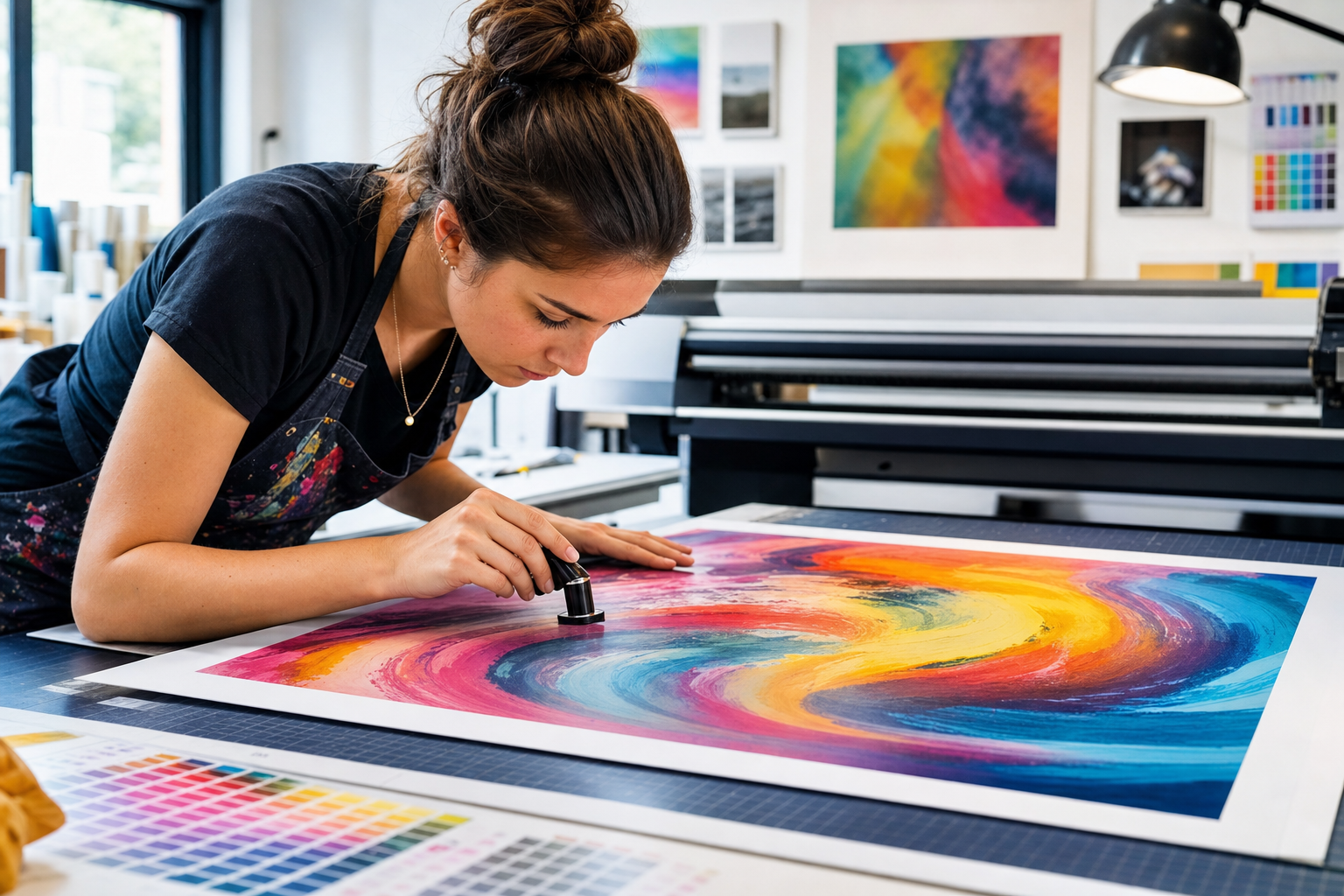
You create your artwork and print it, reversed, onto sublimation transfer paper using a printer loaded with sublimation inks. The print looks dull on the paper. That is normal. The colours come alive only after heat is applied.
Position and press
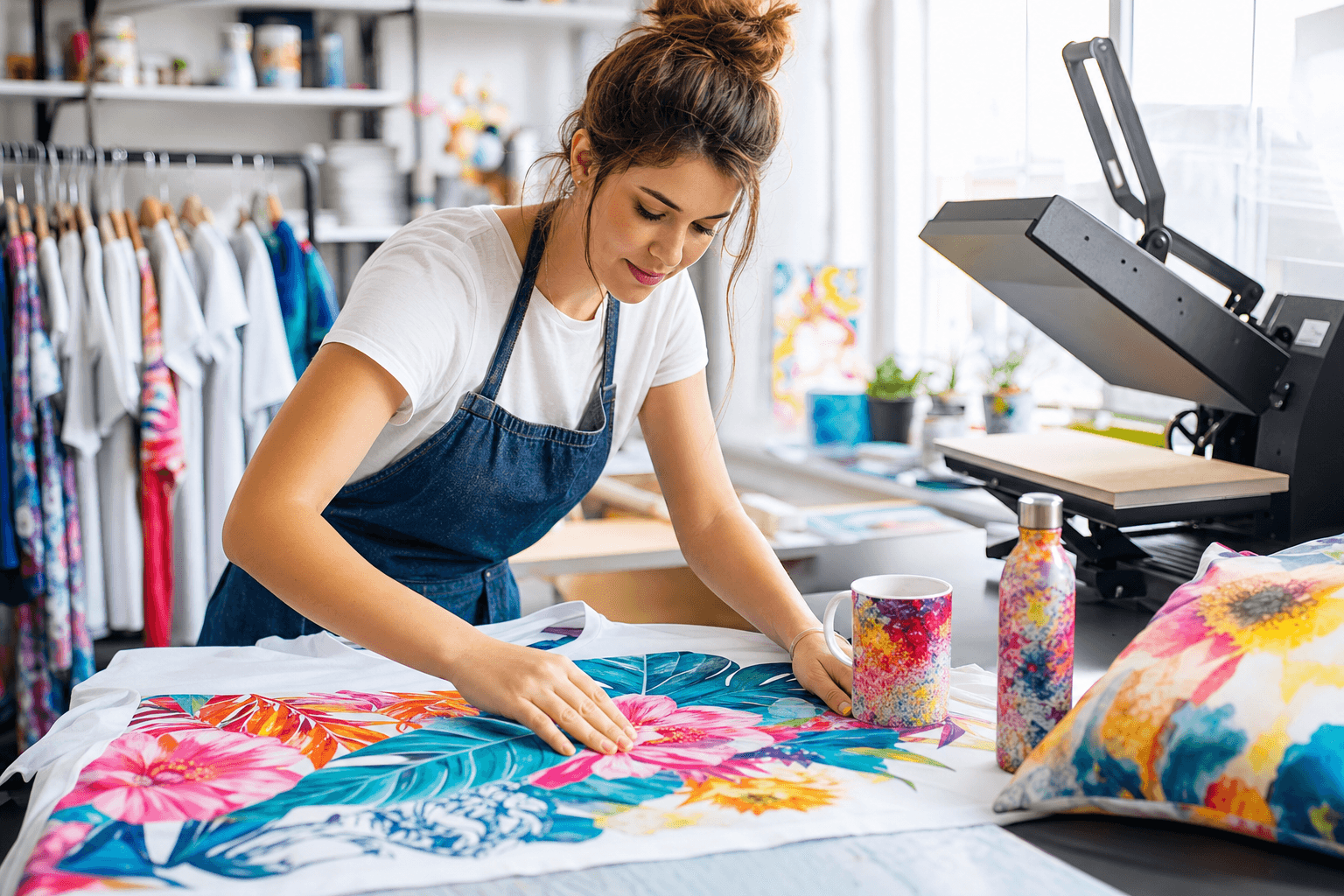
You tape the printed paper onto the blank to stop it shifting, then apply it in a heat press at the correct temperature and time. Mugs use a dedicated mug press, while flat items use a flat platen press.
Reveal and cool
You peel the paper while it is hot and let the item cool. The image is now sealed into the surface.
What you can and cannot make
This is the rule that trips up beginners. Sublimation needs polyester or a special coating to bond. It will not work on natural cotton or on bare ceramic, metal or wood.
Good candidates include polyester t-shirts and sportswear, coated mugs, phone cases, mouse mats, coated metal plaques, photo panels and polyester bags. Manufacturers sell items described as sublimation blanks, which carry the right coating. Always check that a blank is rated for sublimation before you buy a box.
Light coloured blanks give the best results, because sublimation inks are translucent and rely on a pale background to show true colour. You cannot sublimate white onto a dark item, which is a hard limit to remember.
The kit you need
A starter setup is modest. You need a sublimation printer with sublimation inks, sublimation transfer paper, heat resistant tape, a heat press suited to your products, and a stock of compatible blanks. Lint free gloves and a small trimmer help you keep prints clean and square.
Colour management is the quiet hero of good sublimation. The colour you see on screen will not match the final item unless you use a proper colour profile for your printer and paper combination. Many suppliers provide these profiles. Loading the right one is the difference between muddy results and crisp, true colour.
Common mistakes and how to avoid them
Most sublimation failures come from a few repeat offenders.
Ghosting happens when the paper shifts during pressing or as you lift it, leaving a faint double image. Tape firmly and lift cleanly to prevent it.
Faded or dull colour usually means too little time or heat, or a missing colour profile. Run a test on a spare blank and adjust before pressing a customer's order.
Moisture is a hidden enemy. Damp paper or a damp blank releases steam that scatters the ink and causes spotting. In a humid climate like Mauritius, store your paper sealed and consider a quick pre-press to drive off moisture from garments.
Uneven pressure leaves patchy areas. Make sure the press closes evenly and that thick seams or zips are not creating high spots.
Building a small product range
Sublimation suits a gift focused business well. Personalised mugs for birthdays, photo panels for weddings, named sports bottles and team kit all sell steadily. Because the blanks are small and light, you can hold a useful range of stock without filling a workshop.
Start with two or three product types you can make perfectly, build a few samples to show, and add new blanks only when customers ask. Keep a record of your tested settings for each blank, since a mug, a phone case and a metal plaque each have their own ideal time and temperature.
Done well, sublimation turns a plain blank into a keepsake. Master the colour profile, control your heat and moisture, and the method will reward you with products people are happy to pay for.
Great print starts with the right supplies and know how. Explore the wider Graphic Supplies ecosystem.