
Why finish matters more than most people think
When people compare print quotes, they often focus on paper, ink, or size. But the finish can change how a job looks, feels, lasts, and even how customers judge its quality. The same artwork can feel premium or cheap depending on whether it is matte, gloss, laminated, varnished, or left uncoated.
For printers, sign makers, and custom product businesses, choosing the right finish is not just about looks. It affects readability, durability, cleaning, handling, shipping, and cost. In many cases, a smart finish choice can prevent complaints and extend the life of the product.
This guide breaks down the most common finish options and explains how to choose the right one for your project.
What a print finish actually does
A finish is the final layer or treatment applied to a printed piece or substrate. It may be a coating, a lamination, a varnish, or a surface treatment. Its job is usually one or more of the following:
- Protect the print from scratches, moisture, and UV exposure
- Improve appearance by adding shine, texture, or depth
- Make the item easier to clean
- Reduce glare for better readability
- Increase perceived value
- Improve durability during handling, transport, or outdoor use
Not every finish suits every application. The best choice depends on where the item will be used, who will handle it, and how long it needs to last.
Matte, gloss, or satin, which look works best?
The three most common visual finishes are matte, gloss, and satin.
Matte
Matte finishes reduce reflection and give a softer, more modern appearance. They are often preferred for:
- Premium branding
- Text-heavy brochures or menus
- Wall graphics viewed under strong lighting
- Products where glare would make reading difficult
Matte surfaces are good at hiding fingerprints and minor surface marks. However, they can sometimes make colours look slightly less vivid than gloss.
Gloss
Gloss finishes are bright and reflective. They make colours appear more saturated and can create a polished, high-impact look. They are useful for:
- Promotional flyers
- Product packaging
- Posters and display graphics
- Any design that needs strong visual punch
The downside is glare. Under bright lights or near windows, gloss can reduce readability. It also tends to show fingerprints and scuffs more easily.
Satin
Satin sits between matte and gloss. It offers a subtle sheen without being overly reflective. It is often the safest all-round choice for:
- Business cards
- Book covers
- Presentation materials
- Retail graphics with mixed lighting conditions
If a client says they want something classy but not shiny, satin is often the best recommendation.
Lamination, varnish, or no protection?
Visual appearance is only part of the decision. You also need to think about protection.
Lamination
Lamination adds a film over the printed surface. It is one of the most common ways to protect printed materials. It can be:
- Gloss laminated, for a brighter and more durable surface
- Matte laminated, for a non-reflective premium feel
- Soft-touch laminated, for a velvety, luxury finish
Lamination is ideal when the item will be handled often, exposed to moisture, or needs a longer life. It is especially useful for menus, signage, event graphics, ID cards, and premium packaging.
The trade-off is cost. Lamination adds material and labour, and it may not be necessary for short-term or low-use items.
Varnish or coating
A varnish or coating is usually a lighter protective treatment than lamination. It can improve resistance to scuffing and may add shine. It is often used in commercial print runs where speed and cost matter.
It is a good middle ground for brochures, leaflets, and catalogues where a small amount of protection is enough.
No finish
Sometimes the best answer is to leave the item uncoated. This is common when:
- The product is very low cost
- The print is short-term
- The substrate already has the desired look or protection
- The item needs to be written on
But uncoated items are usually more vulnerable to damage, especially in humid climates or during transport.
Choosing finishes for specific applications
The right finish depends on the end use, not just the design.
Business cards
Business cards are often judged by touch as much as by design. A matte or soft-touch laminated card feels professional and memorable. If the brand needs a bold, vibrant look, gloss can work well, but it may feel less refined for corporate use.
Menus and price lists
These are handled repeatedly, often in food or retail environments. A laminated matte or satin finish is usually the best balance because it is easy to wipe clean and does not create distracting glare.
Posters and retail displays
If the display is under bright lighting, matte is usually better for readability. If the poster is for a window or a visual campaign where impact matters more than close reading, gloss can make colours pop.
Outdoor signage
Outdoor graphics need protection from UV, rain, dust, and cleaning. The finish should support durability, not just appearance. For many outdoor applications, lamination, a protective coating, or the right printed substrate is essential.
Packaging and product labels
Packaging finishes help shape how consumers perceive value. Soft-touch and satin can feel premium, while gloss can make colours stand out on shelves. For labels, make sure the finish does not interfere with adhesion or barcode scanning.
A simple decision framework
When advising a customer, ask these five questions:
- Where will the item be used, indoors or outdoors?
- How often will it be handled?
- Is glare a problem?
- Does it need to be cleaned?
- Is the goal premium appearance, low cost, or long life?
A good finish choice comes from matching the answer to the product.
For example:
- High handling plus cleaning needs, choose lamination
- Strong visual impact, choose gloss
- Readability and elegance, choose matte or satin
- Luxury feel, choose soft-touch laminate
- Short-term budget job, choose a simple coating or no finish
Common mistakes to avoid
Many print issues come from choosing a finish that does not suit the use case.
Choosing gloss when glare matters
A glossy finish can look impressive in a sample book, but on a wall under spotlights it may become hard to read.
Skipping protection on handled items
Menus, counters signs, product cards, and promotional pieces often need more protection than expected. Without it, they wear out quickly.
Over-finishing low-value jobs
Not every job needs premium lamination. Extra finishing can increase cost without adding enough value, especially for short-lived campaigns.
Ignoring the substrate
Paper, vinyl, board, and rigid materials each behave differently. A finish that works on one may not perform the same on another.
Not testing before production
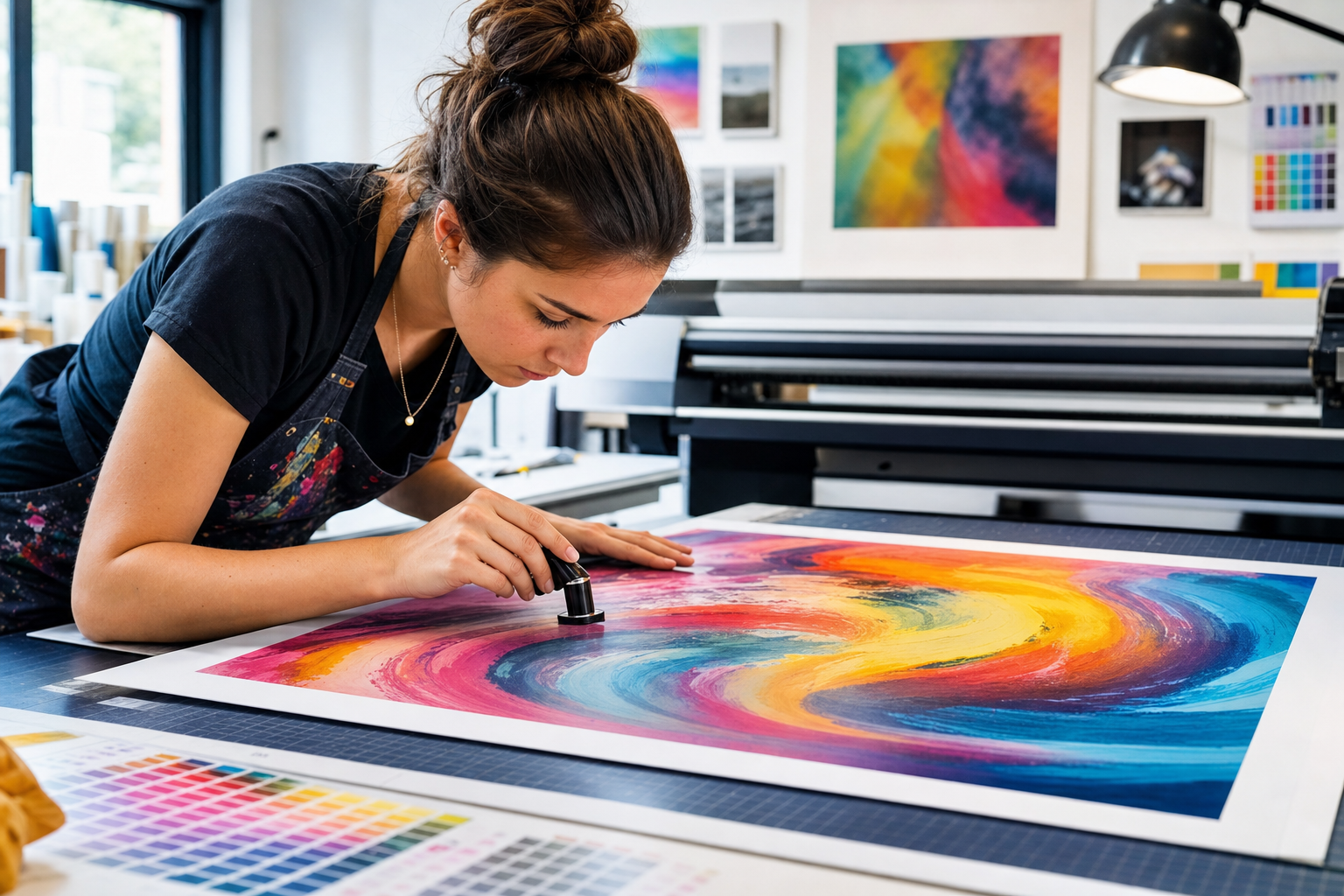
Always produce a sample when the finish is critical. Colour shift, reflectivity, and surface feel can be difficult to judge on screen.
What printers should tell customers
Clients usually understand the look they want, but not always the technical reason behind it. Clear advice helps them choose wisely and reduces disputes later.
A useful way to explain it is to connect finish to outcome:
- If they want a premium touch, recommend soft-touch or matte lamination
- If they want colours to stand out, recommend gloss
- If the piece will be wiped often, recommend protective lamination
- If they need low cost and short life, recommend a simpler finish
This makes the sales conversation more consultative and builds trust.
Final takeaway
The best print finish is the one that supports the job’s real purpose. Matte improves readability and gives a modern feel. Gloss boosts colour and impact. Satin offers a balanced option. Lamination adds protection and longevity, while varnish can provide lighter protection at lower cost.
Before choosing, think about handling, lighting, cleaning, durability, and budget. A finish is not just the final step in production, it is part of the product itself. When you choose it well, the print looks better, lasts longer, and performs exactly as the customer expects.
Great print starts with the right supplies and know how. Explore the wider Graphic Supplies ecosystem.