Custom apparel: heat transfer, DTF and screen printing compared
14 June 2026 · By GraphicTech.mu · Updated 17 June 2026
Three ways to put a design on a shirt
Custom apparel is one of the most popular ways into the print business, and for good reason. Shirts, hoodies, caps and bags sell steadily, need little floor space and let you start small. The first real decision is which printing method to use. The three most common are heat transfer vinyl, direct to film and screen printing. Each has a place, and the smart approach is to match the method to the order rather than insisting on one for everything.
Heat transfer vinyl
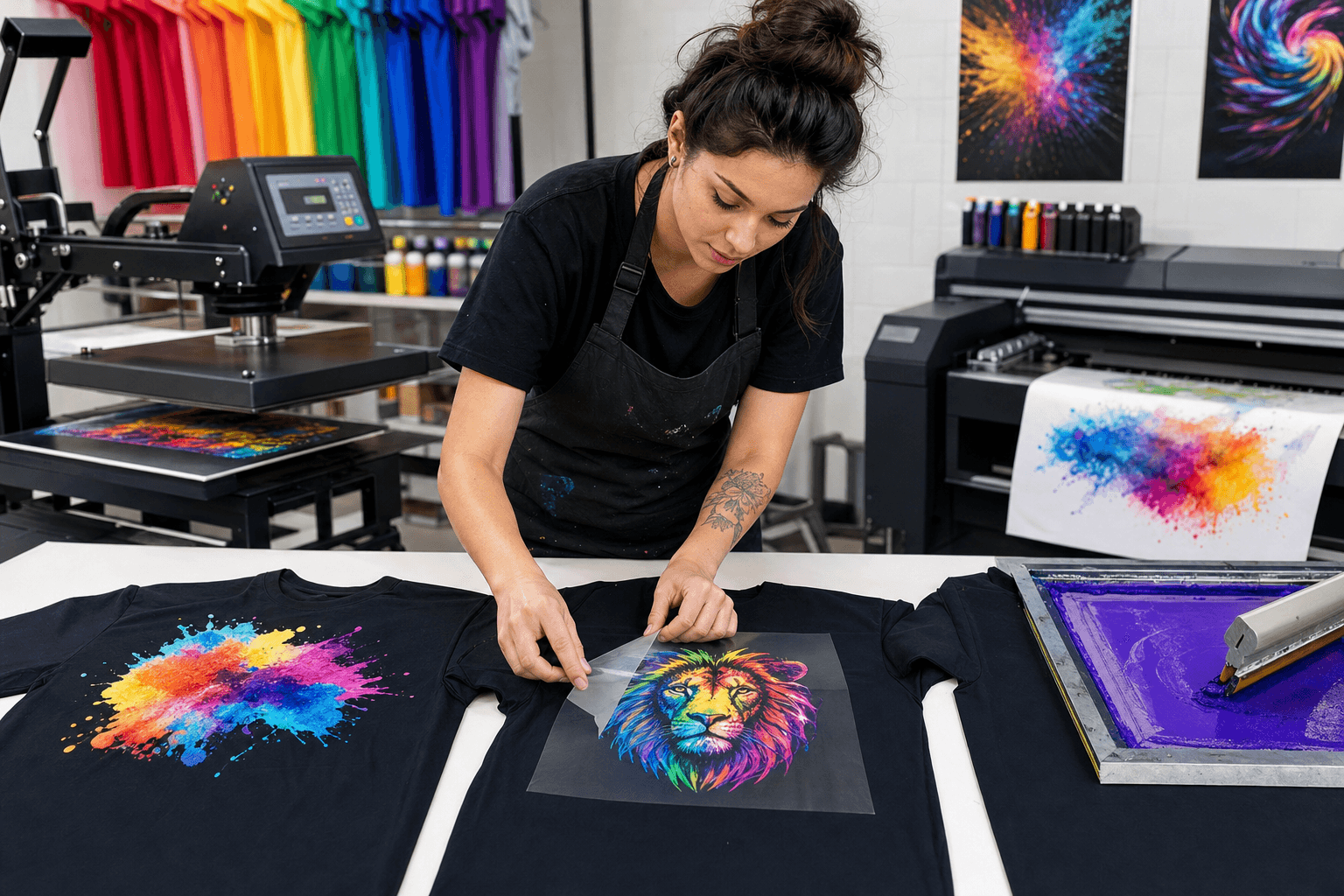
Heat transfer vinyl, often shortened to HTV, is a coloured film that you cut to shape, weed, and press onto fabric with a heat press. It is the most accessible method and a common starting point.
Its strengths are low startup cost and excellent results for simple designs. Names and numbers on sports shirts, single colour logos and bold text look sharp and last well. Specialty films add glitter, flock and reflective finishes that customers love.
Its limits show with complex artwork. Because each colour is a separate cut layer that must be weeded and aligned by hand, detailed or multi colour designs become slow and fiddly. HTV suits low quantities and simple graphics rather than photographic prints.
Direct to film
Direct to film, known as DTF, is a newer method that has changed small apparel printing. You print the design onto a special film using DTF inks, apply an adhesive powder, cure it, then heat press the film onto the garment.
Its big advantage is freedom. DTF prints full colour, detailed and photographic designs in one step, with no weeding and no colour layering. It bonds to cotton, polyester and blends, so you are not restricted by fabric type the way sublimation is. It works on dark and light garments alike.
This flexibility makes DTF a strong all rounder for varied orders. The transfers can also be made in advance and pressed later, which suits batch work. The main considerations are the cost of the printer and inks, and the need to manage the powder and curing step cleanly.
Screen printing
Screen printing is the traditional method behind most mass produced printed shirts. Ink is pushed through a fine mesh screen, with one screen prepared for each colour in the design.
Its strength is volume and durability. Once the screens are set up, printing hundreds of shirts is fast and cheap per unit, and a well cured screen print is extremely hard wearing. For a large order of the same design, nothing beats it on cost.
Its weakness is setup. Preparing screens takes time and effort, and each colour adds another screen, so small or multi colour jobs are not economical. Screen printing rewards quantity. It is the wrong choice for a single shirt and the right choice for five hundred.
Matching the method to the order
The practical question is not which method is best overall, but which fits this particular job.
For a handful of shirts with simple text or a one colour logo, heat transfer vinyl is quick and cheap. For a small run of detailed, colourful or photographic designs, direct to film is usually the answer, because it handles complexity without the setup of screens. For a large run of the same design, screen printing wins on cost per shirt and durability.
Many successful apparel businesses in Mauritius run two methods together. HTV and DTF make a powerful pair for the local market, where orders are often small to medium and varied. HTV covers names, numbers and simple jobs, while DTF handles full colour and detail. Adding screen printing makes sense later, once you regularly win larger bulk orders that justify the setup.
Durability and quality
Customers judge apparel by how it survives washing. All three methods last well when done correctly. Screen printing and DTF are very durable. HTV is durable for simple designs but can lift at the edges if pressed poorly or if the garment is washed harshly.
Give every customer simple care advice: wash inside out, in cool water, and avoid harsh tumble drying. Good care advice reduces complaints and protects your reputation as much as good pressing does.
A sensible path
Start with the method that matches your likely orders and your budget. For most small apparel businesses, that means heat transfer vinyl first, then direct to film as soon as customers ask for full colour work. Reserve screen printing for when bulk orders become regular. Choose the method per job, keep your pressing settings consistent, and let the quality of your finished garments do the selling.
Great print starts with the right supplies and know how. Explore the wider Graphic Supplies ecosystem.