Pricing and selling your printed products in Mauritius
15 June 2026 · By GraphicTech.mu · Updated 17 June 2026
Good work is not enough on its own
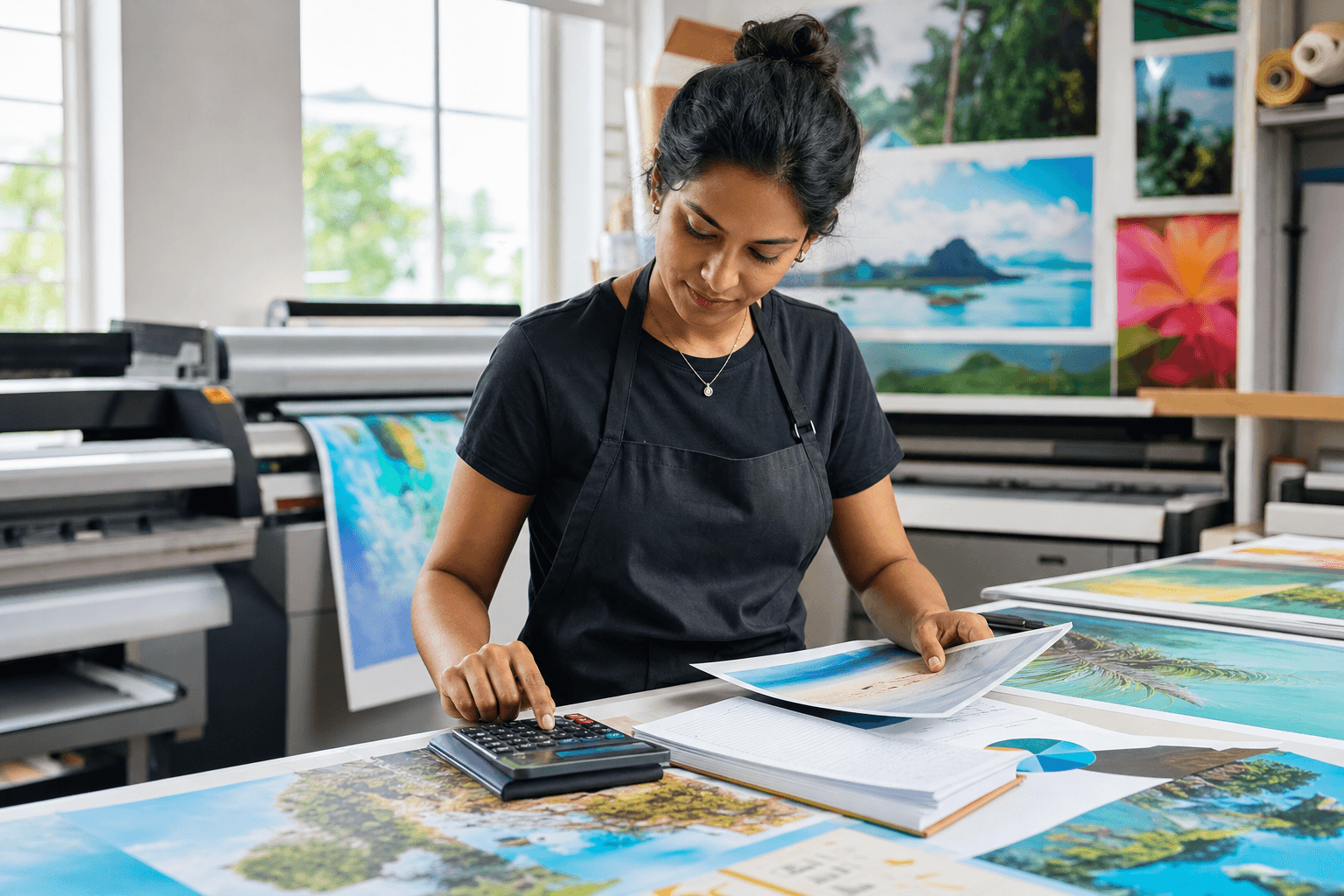
Many print and signage businesses produce excellent work and still struggle, because they have never learned to price and sell properly. The craft side and the business side are different skills. A sharp banner that you sold at a loss does not help you, and a fair price means nothing if no customer ever hears about you. This guide covers both: how to price for profit, and how to find and keep customers in the Mauritian market.
Knowing your true costs
The most common pricing mistake is counting only the material. The real cost of a job is larger, and ignoring the hidden parts is how a busy workshop ends up making no money.
A fair cost calculation includes several parts.
Materials
The vinyl, ink, blanks, banner material and laminate the job consumes. Remember to include waste, because not every sheet or print comes out perfect the first time.
Your time
This is the part beginners forget. Design, printing, weeding, pressing, finishing and dealing with the customer all take time. Decide what an hour of your work is worth and count every hour the job really takes, not just the minutes the machine runs.
Machine and overhead
Your equipment wears out and needs maintenance, and your workshop has costs like electricity and rent. A small share of these belongs in every quote so the business stays sustainable.
Profit
Profit is not a dirty word. It is what lets you reinvest, replace machines and survive a slow month. Add a margin on top of your costs deliberately, rather than hoping something is left over.
Building a quote
With your costs understood, quoting becomes calmer. Add up materials, time, a share of overhead, then your profit margin. For repeat products like shirts or mugs, work out a reliable per unit price so you can quote quickly and consistently.
Resist the temptation to win every job by being the cheapest. Competing only on price is a race to the bottom, and there is always someone willing to lose money faster than you. Compete instead on quality, reliability and service, and price with the confidence that those are worth paying for.
Quoting for quantity
Print work has strong economies of scale, and your pricing should reflect that. Setup time is the same whether you make ten shirts or one hundred, so the per unit price should fall as quantity rises. Offering clear quantity breaks encourages larger orders and rewards the customers who bring you the most work.
Finding customers
In Mauritius, the demand for print and signage is steady because almost every business needs it. Shops need signs and window graphics. Events need banners and backdrops. Sports teams need printed kit. Small businesses need branded shirts, stickers and promotional items.
Start locally and visibly. Your own signage should be your best advertisement, because a business with a dull sign of its own inspires little confidence. Build a small portfolio of samples you can show and hand over. Photograph your finished jobs in place and share them, since seeing a real sign on a real shopfront is far more convincing than a price list.
Word of mouth is powerful in a small market. One satisfied customer who tells a neighbour is worth more than any advertisement. That makes reliability and quality your strongest marketing tools.
Keeping customers coming back
The most profitable customer is the one who returns. A shop that orders new seasonal window graphics, a team that reprints kit each year, an event company that needs banners every few months. These repeat relationships are the foundation of a stable print business.
You keep them by being dependable. Quote clearly, deliver when you promised, and fix any genuine fault without argument. Keep a record of each customer's past jobs, fonts and colours so a reorder is quick and consistent. Small touches like remembering a logo file or a preferred shirt size turn a one off buyer into a regular.
Handling deposits and payment
Custom print work cannot be resold, since a banner with someone else's name is worthless to anyone else. That makes a deposit on custom orders sensible, especially for larger jobs. Taking part payment up front protects you if a customer changes their mind, and most reasonable clients understand why.
Agree the design before you print. A quick proof that the customer approves in writing prevents the painful and expensive argument that follows a misspelt name or a wrong colour. Approval first, print second, is a rule worth keeping for every job.
The mindset that lasts
Treat your print work as a real business, not just a hobby that earns a little. Know your costs, price for profit, deliver quality reliably, and look after the customers who return. Do that consistently in the Mauritian market and the orders, and the income, will follow.
Great print starts with the right supplies and know how. Explore the wider Graphic Supplies ecosystem.